Quick answer: why is the water meter still moving?
If the water meter registers use while faucets and appliances are off, water may still be flowing somewhere on the property. Common causes include a running toilet, irrigation, automatic equipment or a hidden supply-line leak. Record the reading, rule out ordinary water use and ask a qualified provider to confirm the source before planning repairs.
What does a moving water meter actually tell you?
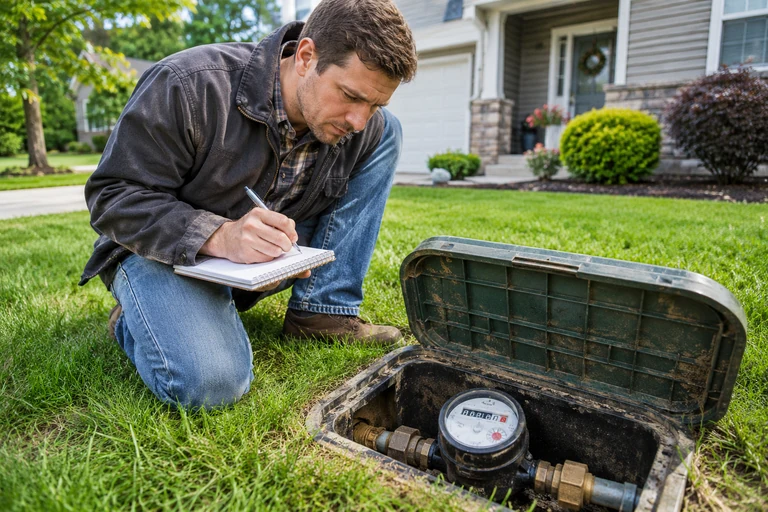
The meter records water passing through the connection. A small low-flow indicator or a changing register can suggest continuing use when nobody expects water to run. That is evidence to investigate, not a diagnosis of an underground break. The cause could be inside the home, in irrigation, at an appliance or on a buried service line. Some intermittent leaks will not appear during a short observation.
A safe, simple meter check to document
- Pause water use. Confirm that faucets, showers, washing machines, dishwashers, water softeners and outdoor irrigation are off. Let automatic cycles finish.
- Find the correct meter. Use your bill or the utility’s guidance; contact the utility if the meter or its display is not accessible.
- Record a reading. Photograph the display or write down the register and time. Observe any low-flow indicator without touching utility controls.
- Check again. Wait approximately 10–15 minutes without using water and compare readings. Repeat later if the issue may be intermittent.
- Describe the result. Note whether the register changed and whether pressure, yard moisture or water bills also changed.
Rule out ordinary sources of water use first
A running toilet can be nearly silent. Irrigation timers, outside spigots, water treatment systems and automatic ice makers can also explain flow. Check only easily accessible controls; do not disconnect pressurized plumbing to perform a test. If the meter is not moving, that does not rule out an intermittent leak that was inactive during the check.
What about the water line between the street and house?
If all known water uses have stopped and the register continues to rise, a plumber may evaluate the private service line along with interior fixtures and irrigation. The exact supply boundary matters. Reynoldsburg explains the city-maintained section and the homeowner section relative to the curb box; see our responsibility guide or the City of Reynoldsburg water-leaks page. Do not infer ownership just because a wet area appears near the sidewalk.
What to ask before authorizing detection
Tell the independent provider the meter reading and observation interval, shutoff status, any known irrigation, and whether moisture or low pressure appeared. Ask which tests are proposed, whether there is an assessment charge, how results will be documented and what would justify excavation. The appropriate method may include pressure testing, checking accessible fittings or acoustic locating—but no one method fits every property.
What if the leak indicator moves but you see no water?
A hidden water leak may not create an obvious puddle. Note whether household pressure has changed, whether the yard is unusually damp and whether water consumption increased. These are supporting clues, not proof that the service line under the yard is damaged. If a reading keeps increasing after known water uses are stopped, discuss testing options before any excavation.
Questions homeowners ask
Does a moving meter prove an underground service-line leak?
No. It suggests water moved through the meter during the observation. Toilets, irrigation and other plumbing uses should be considered before assuming a buried pipe failed.
How long should I compare water meter readings?
A short no-use observation of roughly 10–15 minutes can reveal continuous flow; intermittent leaks may require a separate observation at another time.
Will the meter stop when I close the main shutoff?
That depends on the meter location, the shutoff location and whether irrigation or other branches are between them. Have a provider interpret an isolation test rather than assuming it identifies the leak.
Can a running toilet move the meter?
Yes. Even quiet toilet refilling can use water, so check obvious indoor and outdoor sources first.
Should I open the city curb box myself?
Do not tamper with secured utility equipment or curb-stop valves. Contact the water utility for help or follow its published access guidance.
When should I request leak detection?
When unexplained meter movement continues or accompanies yard moisture, pressure changes or suspected water loss, a professional can assess the possible sources.
Sources and further reading
Updated November 13, 2026. Observations are not a diagnosis; confirm repairs and pricing with the independent provider.
Back to all homeowner guides →